Long-lasting thermal insulation
Thermal conductivity of about 0.028W/(m·K) gives high and stable thermal resistance over time; less insulation thickness is needed for the same result.
About Yongguan
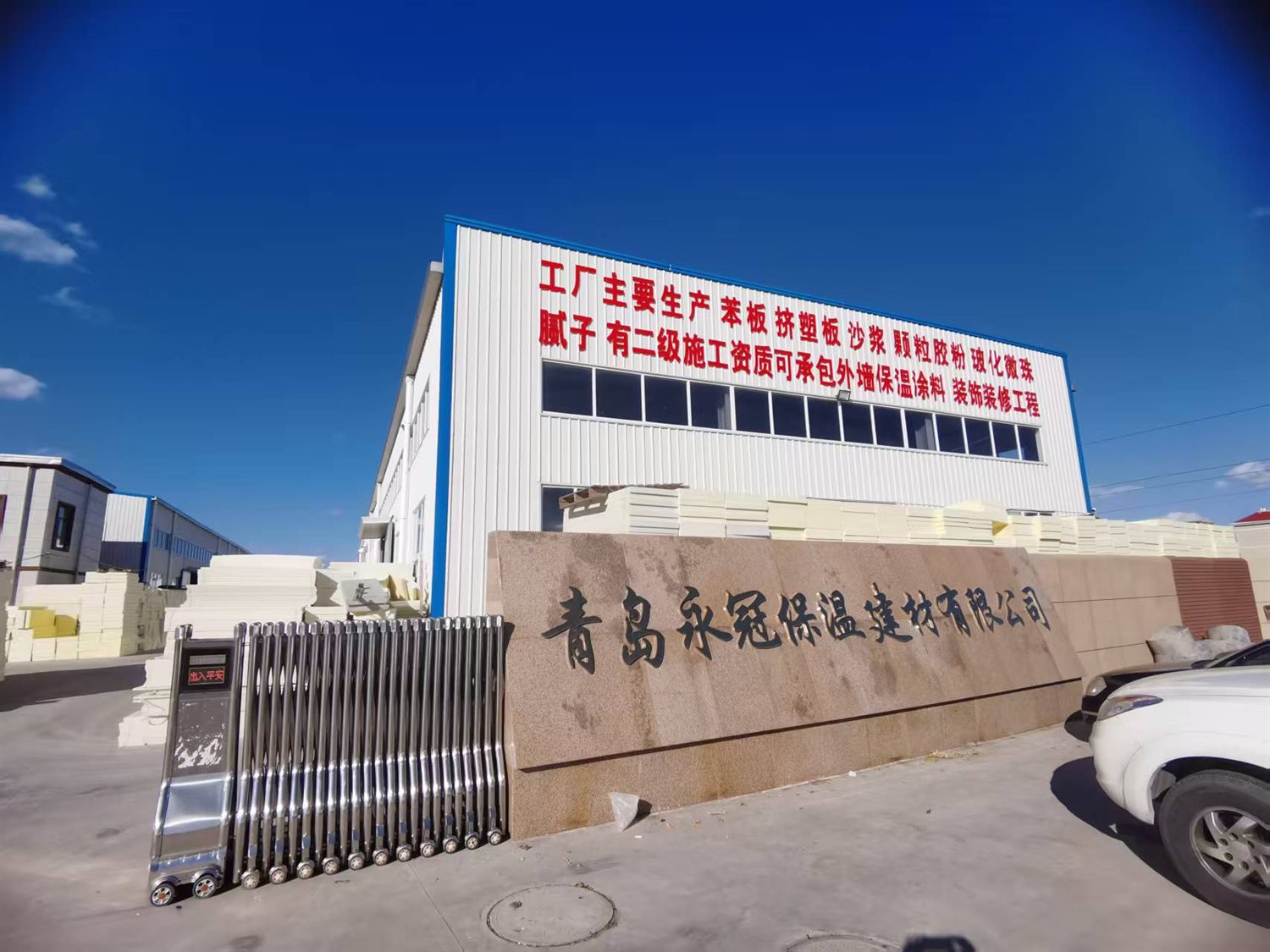
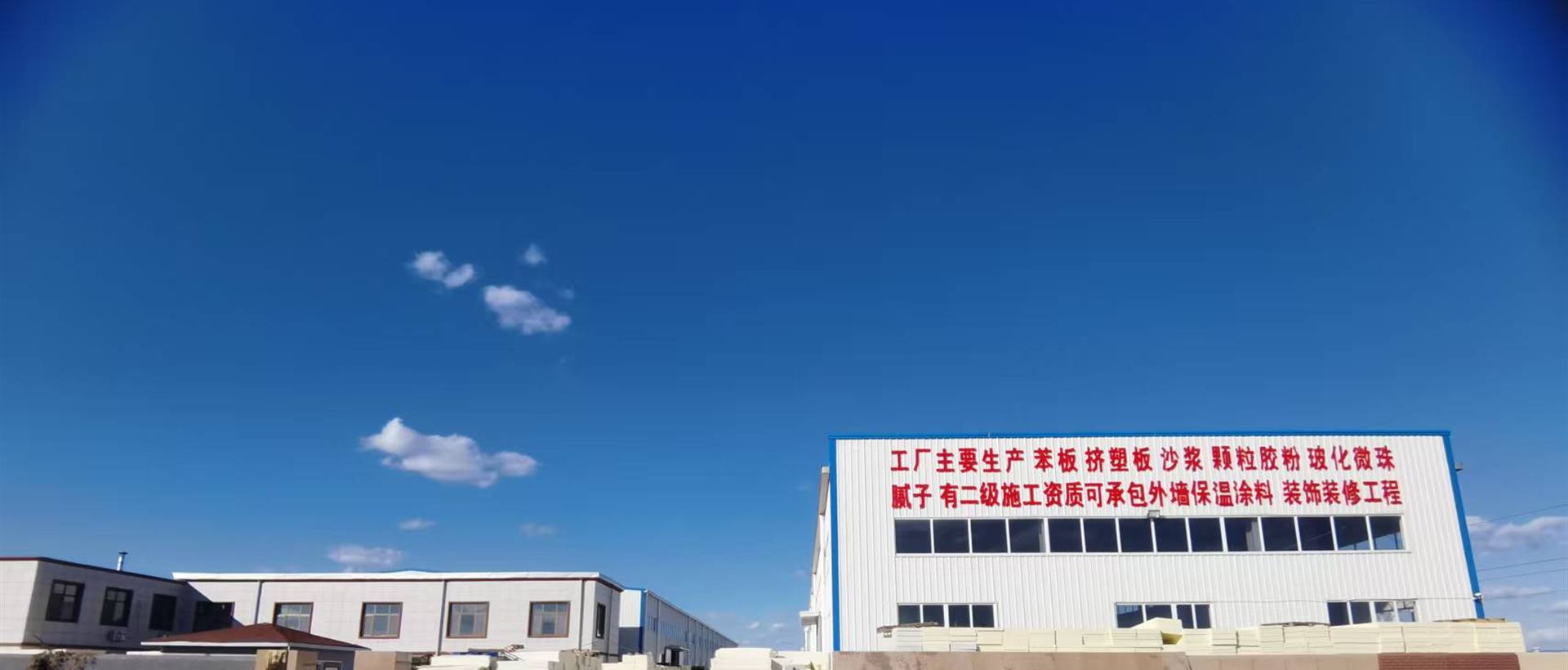
The company is located in the Airport Industrial Zone by the Jiaozhou Bay of Qingdao, Shandong Province. Founded in 2000, with Qingdao Baoli Xingsheng Foam Plant as its predecessor, it is a modern enterprise integrating the production and sales of XPS insulation boards, EPS foam boards, dry mortar, alkali-resistant fibreglass mesh and insulation anchor fasteners.
The company has a registered capital of 2 million CNY, total assets of 30 million CNY and an annual gross output of 60 million CNY. It employs 2 engineers, 4 assistant engineers and 10 technical specialists, with more than 80 staff in total. Its sales network covers Qingdao, Yantai, Weihai, Rizhao and other cities, and it is listed as a designated supplier by several large domestic developers.
Product Categories
The board range centres on XPS insulation boards and EPS foam boards, supported by dry mortar, fibreglass mesh and anchor fasteners. Everything ships from the same plant, which saves projects from sourcing from many suppliers.
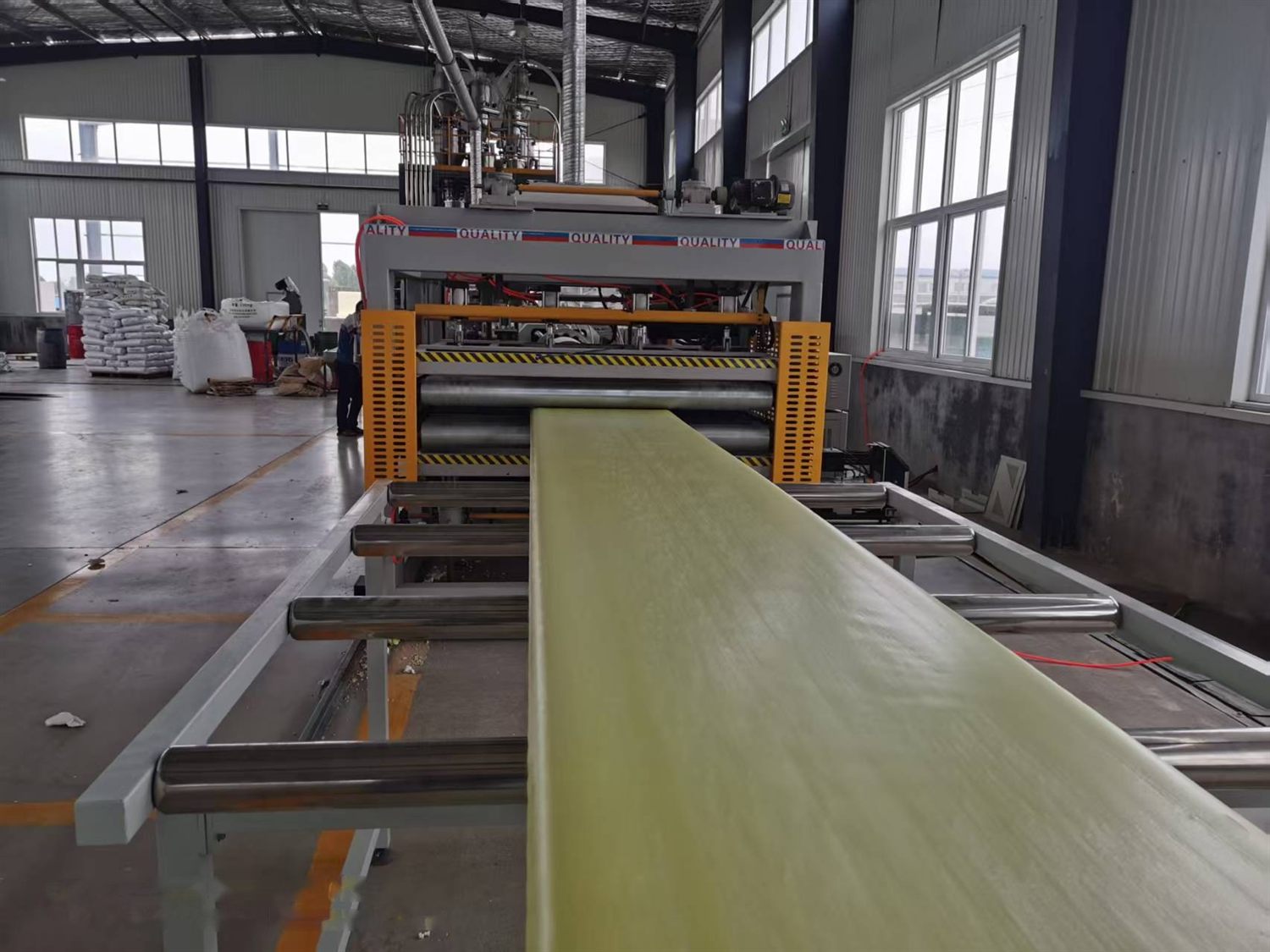
Extruded Polystyrene Board
A rigid foam board with a continuous closed-cell structure, formed by melting polystyrene resin on a twin-screw extruder, injecting blowing agent and extruding the melt through a die. High compressive strength, low water absorption.
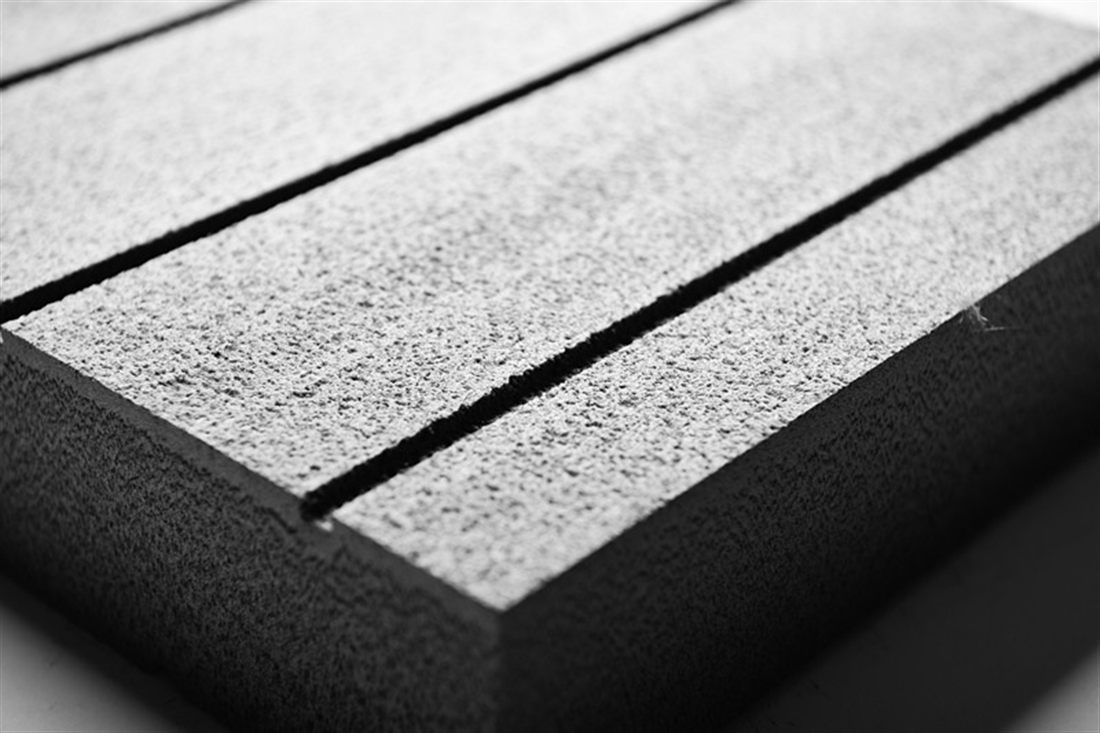
Graphite XPS Board
Graphite powder is added to the raw material and forms a lightweight protective layer on the surfaces of the interconnected cell walls, lowering heat transfer and improving board strength and dimensional stability.
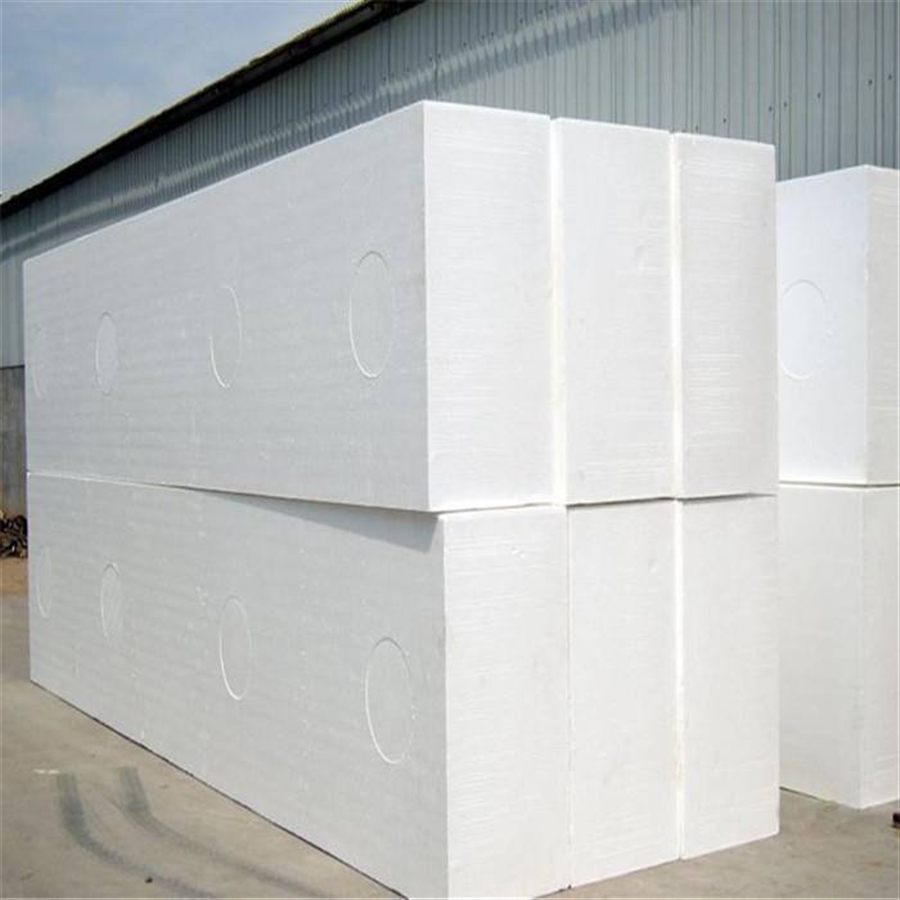
EPS Board
A white board moulded in blocks by steam-heating pre-expanded expandable polystyrene beads in a mould. Fine closed-cell structure; light, easy to cut and easy to shape.
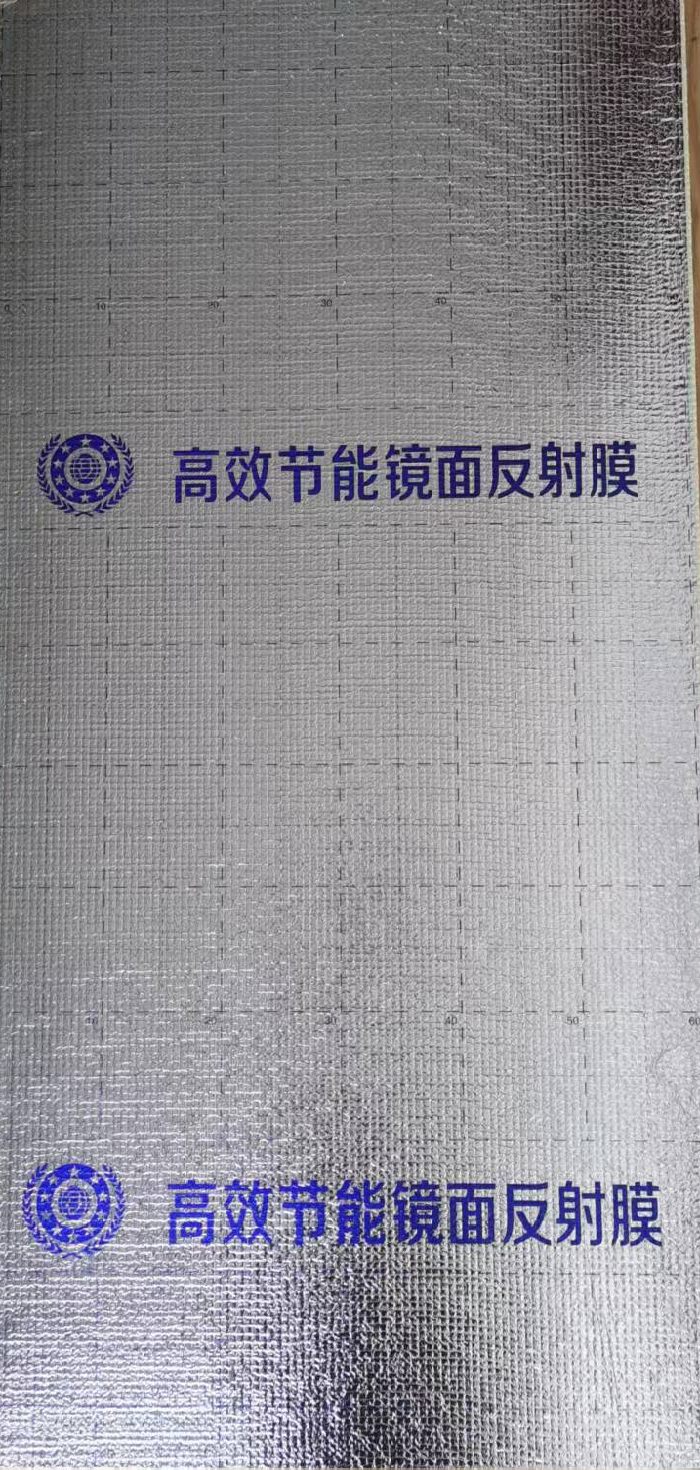
Floor Heating Insulation
A fire-retardant foam board bonded with eco-friendly laminating adhesive and reflective film over 50g/m² non-woven fabric. It blocks heat transfer into the floor slab and keeps heat flowing upward into the room only.
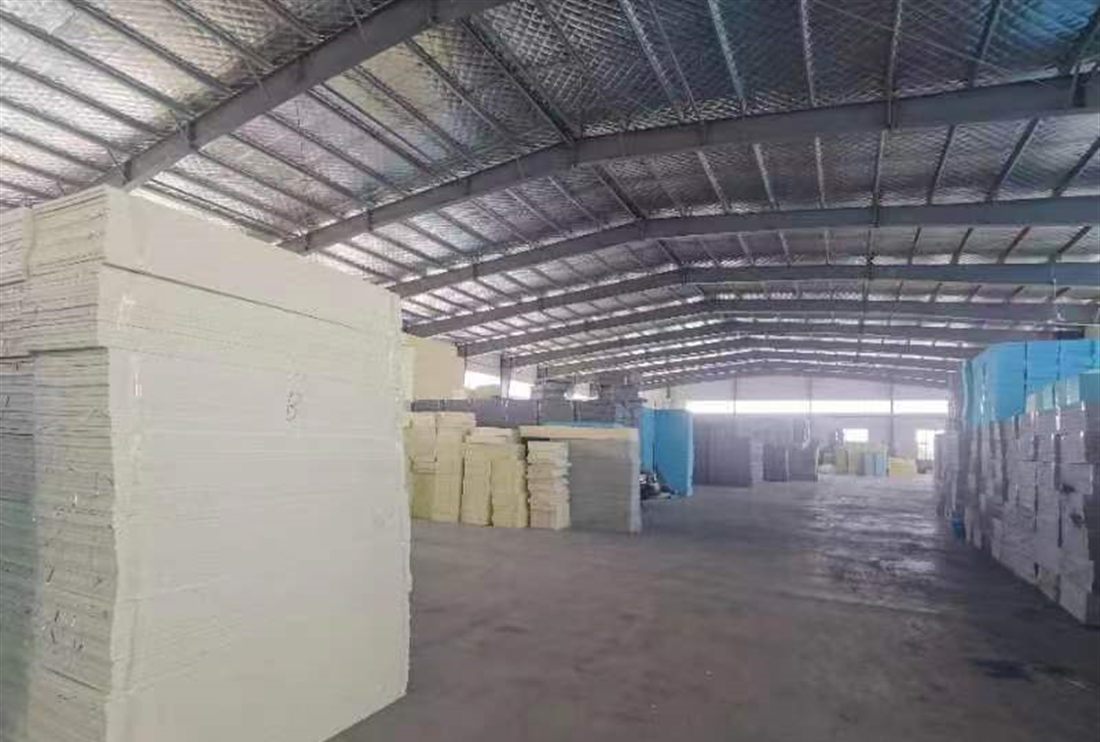
Ancillary Materials
Dry mortar, alkali-resistant fibreglass mesh, insulation anchor fasteners, polystyrene granules, redispersible powder, vitrified hollow microspheres and putty, supplied from the same plant as the insulation boards.
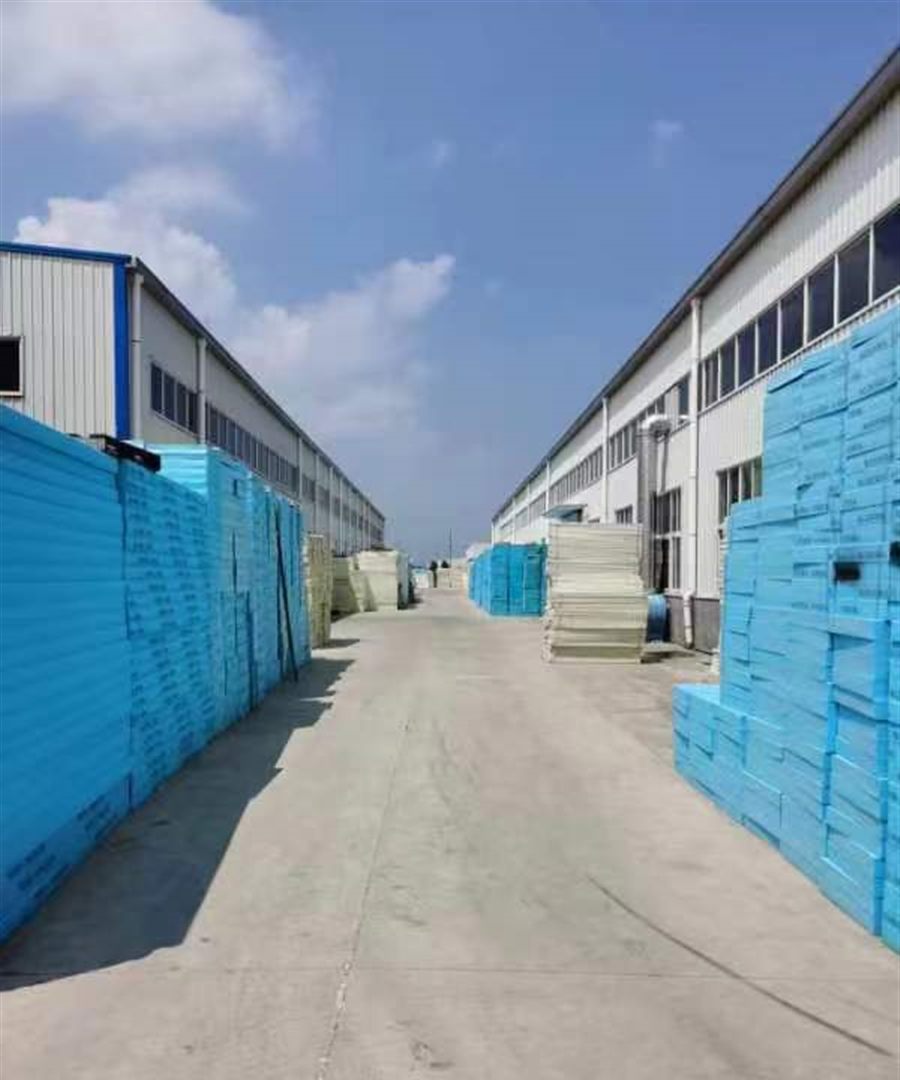
Selection Guide
External walls, roofs, underfloor heating, cold stores, garage roof slabs and road subgrades have different requirements for thickness, compressive strength and fire class. Locate the right model by where it is used.
Why XPS
Polystyrene itself has low thermal conductivity. After extrusion foaming it forms a compact honeycomb closed-cell structure that blocks heat transfer more effectively, which is why XPS boards keep stable insulation performance under damp, low-temperature and high-load conditions.
Thermal conductivity of about 0.028W/(m·K) gives high and stable thermal resistance over time; less insulation thickness is needed for the same result.
The closed-cell structure is dense and the board faces are seamless; the polystyrene molecules themselves do not absorb water, so water absorption is low and the vapour barrier works well.
Compressive strength typically covers 150–700 kPa, suitable for car-park decks, floor levelling layers and low-temperature storage floors and other high-load positions.
Ordinary rigid foam insulation tends to age, absorb water and lose performance after a few years; XPS boards keep their performance even under high vapour pressure, with a service life of up to 30–40 years.
Boards can be cut with a utility knife or hot wire and fit easily against wall and roof substrates, reducing on-site wet work and construction time.
B1 class (flame-retardant), B2 class and standard boards are supplied per project requirements; B1 class is recommended for high-rise and public buildings.
Specification
| Board thickness | 20 / 30 / 40 / 50 / 60 / 80 / 100 mm |
|---|---|
| Standard sizes | 1200×600 · 1800×600 mm (customised on request) |
| Edge type | Plain edge / tongue-and-groove edge |
| Thermal conductivity | ≈0.028 W/(m·K) |
| Compressive strength | 150–700 kPa |
| Fire performance | Class B1 / class B2 / standard type |
| Colour | Natural (light yellow-green), blue, grey (graphite) and others, by batch |
These are common supply sizes and performance ranges, for selection reference only; specific values follow the national standard GB/T 10801.2 and the company's factory inspection reports.
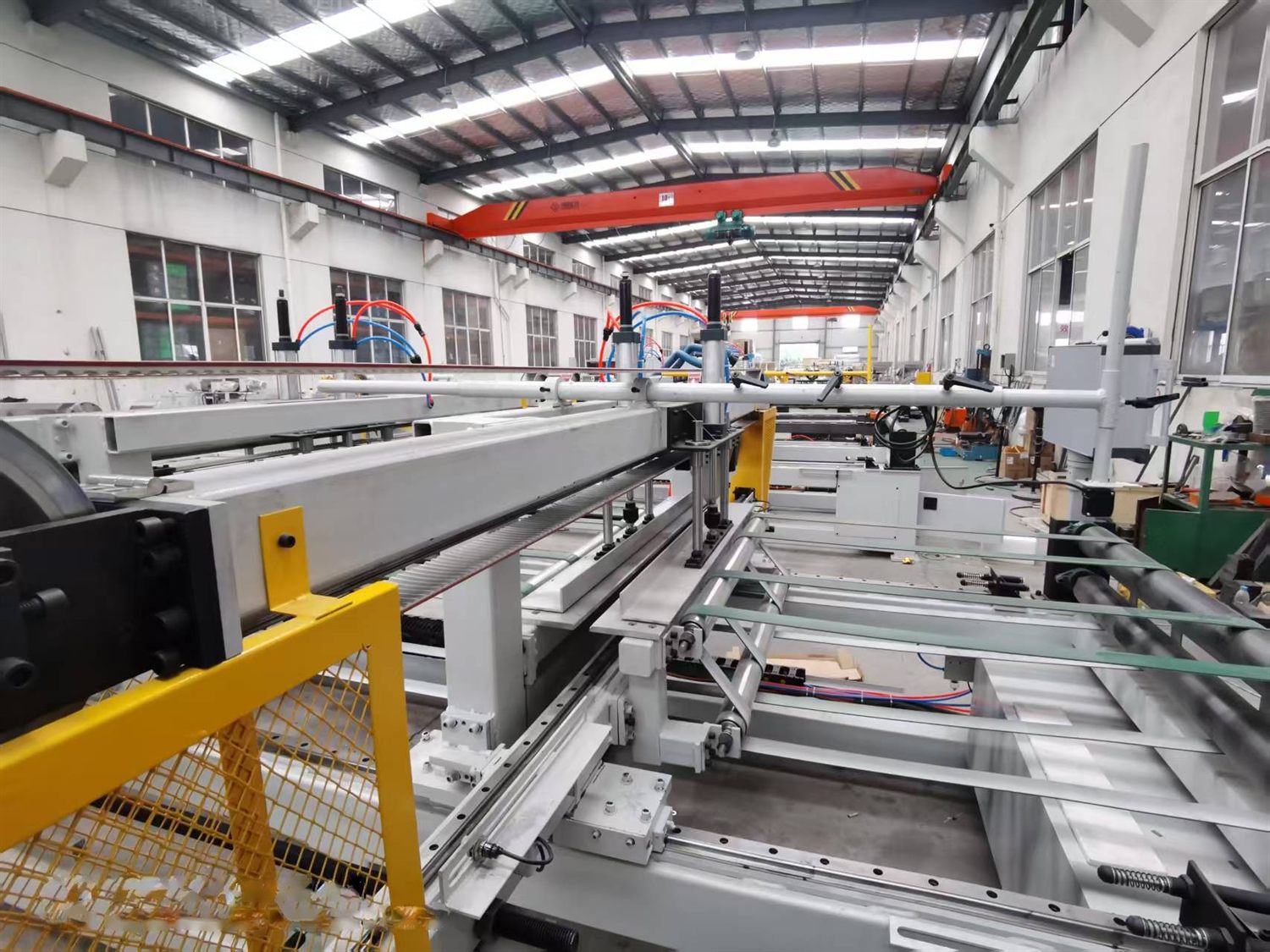
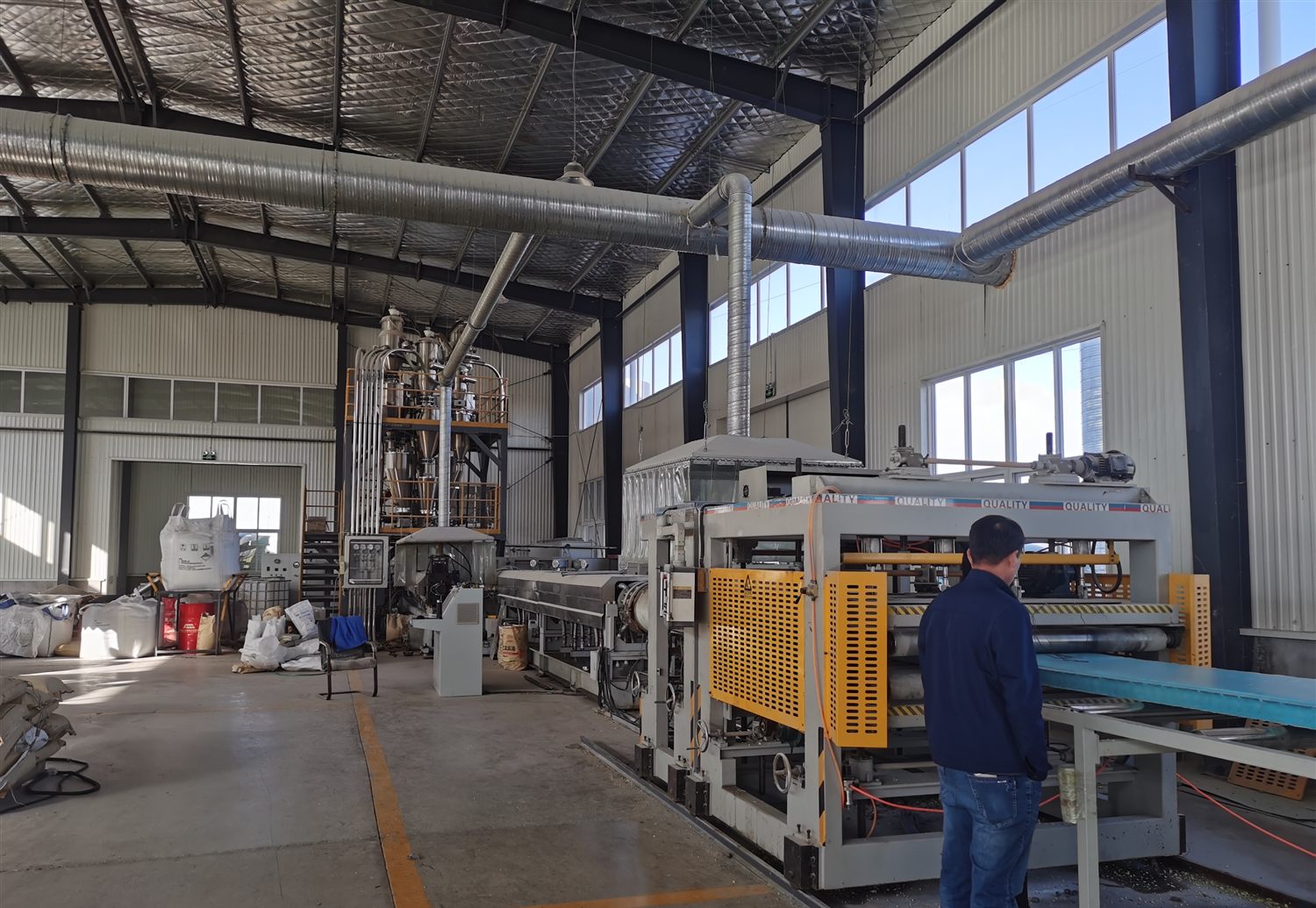
Manufacturing
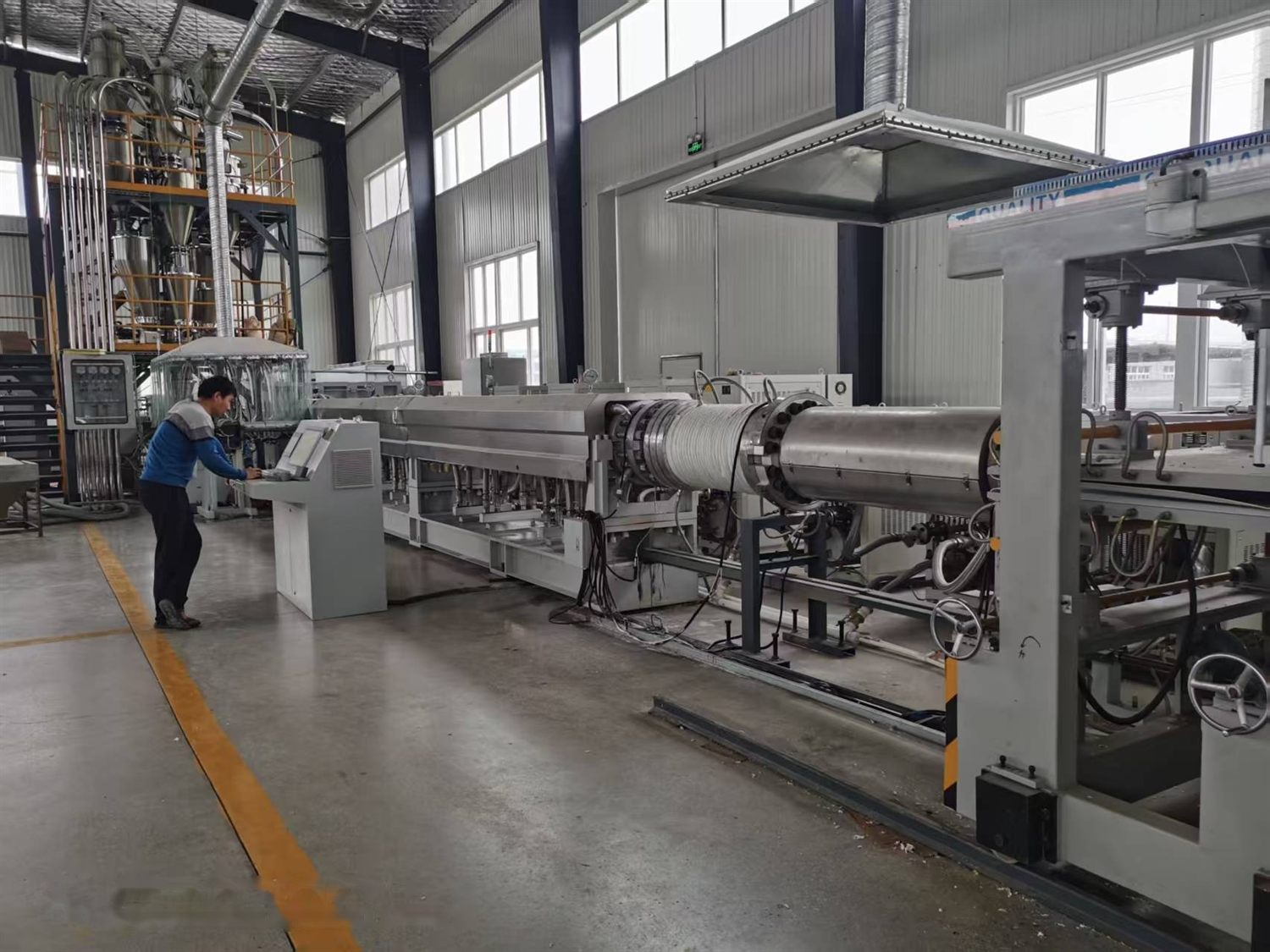
Polystyrene resin with flame retardant, colour masterbatch and other additives is metered to the formula.
The screws heat and melt the mix while blowing agent is injected at the same time to form a uniform melt.
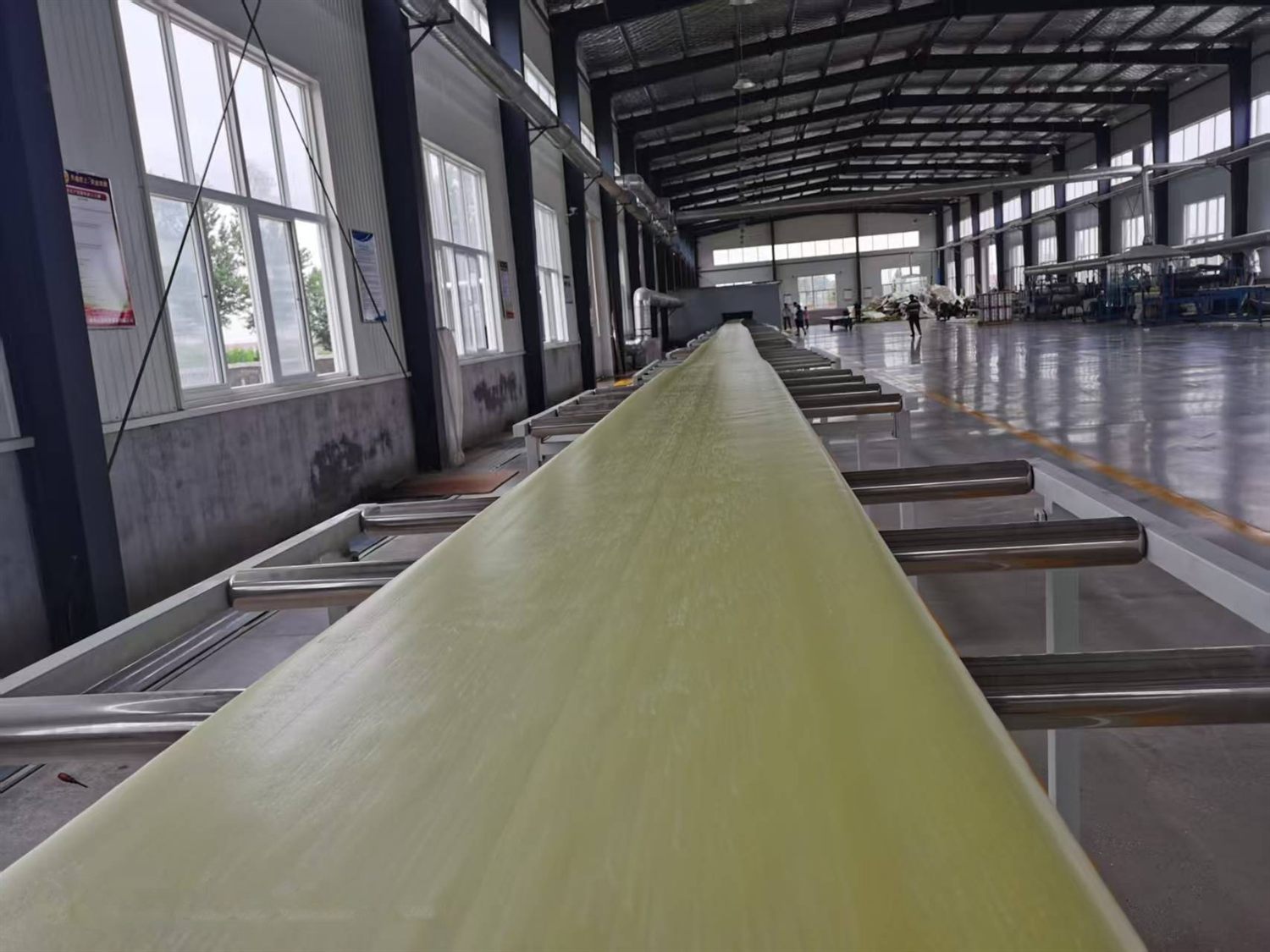
Through the die head the melt is extruded as a continuous closed-cell rigid foam slab stock.
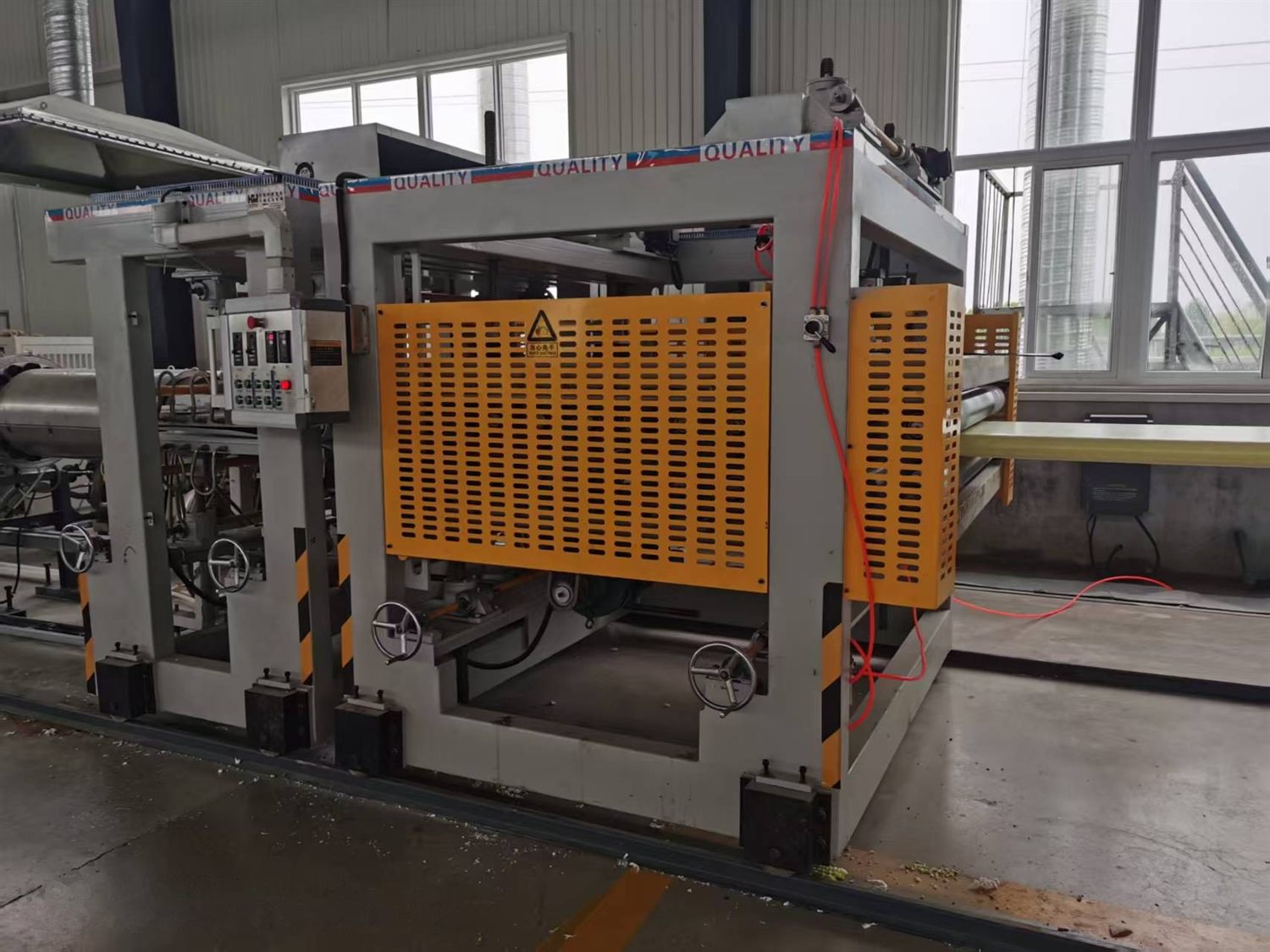
Pulling and cooling bring the board thickness and flatness to a stable state.
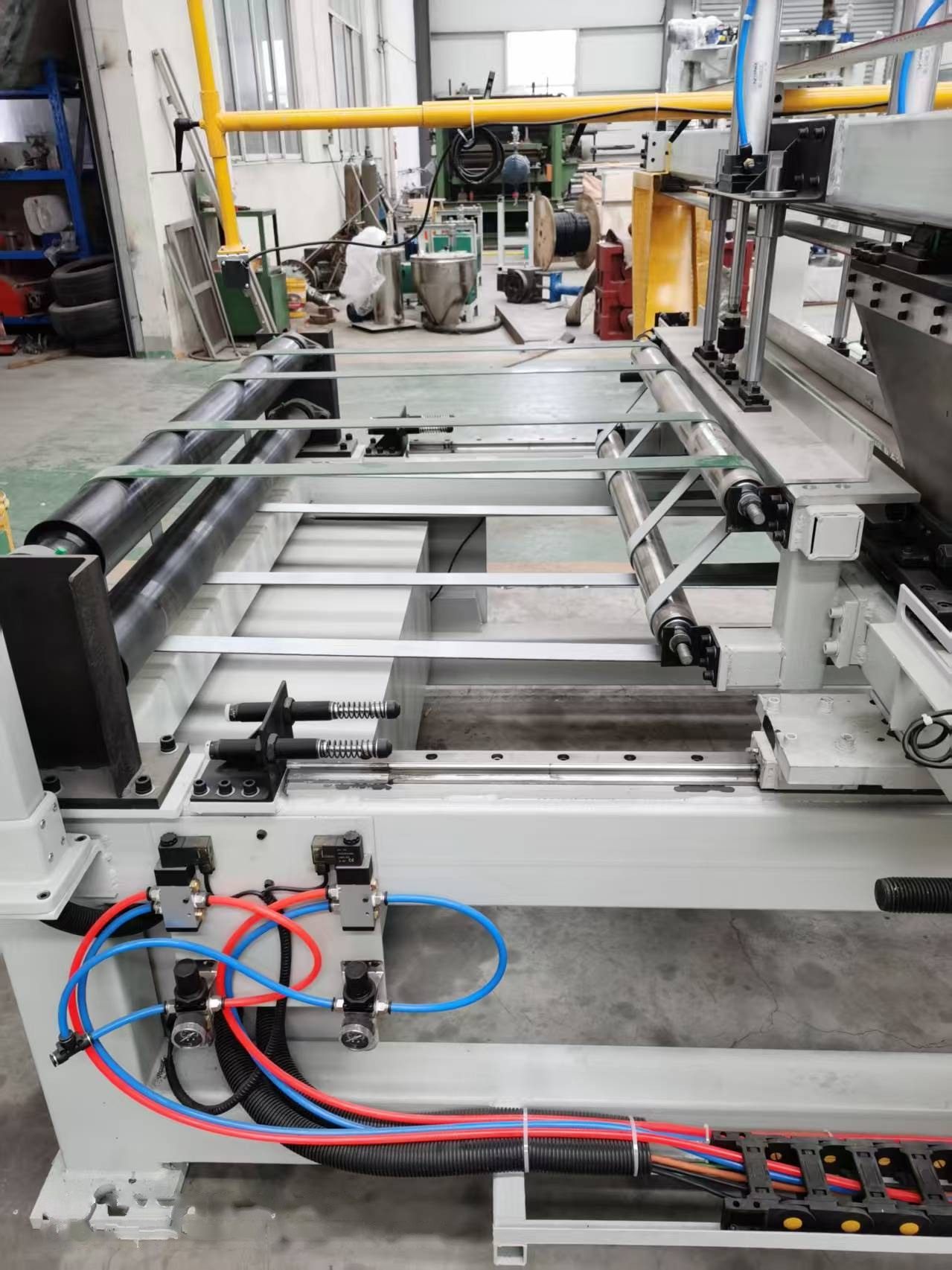
Cut to the ordered sizes, with plain or tongue-and-groove edges as options.
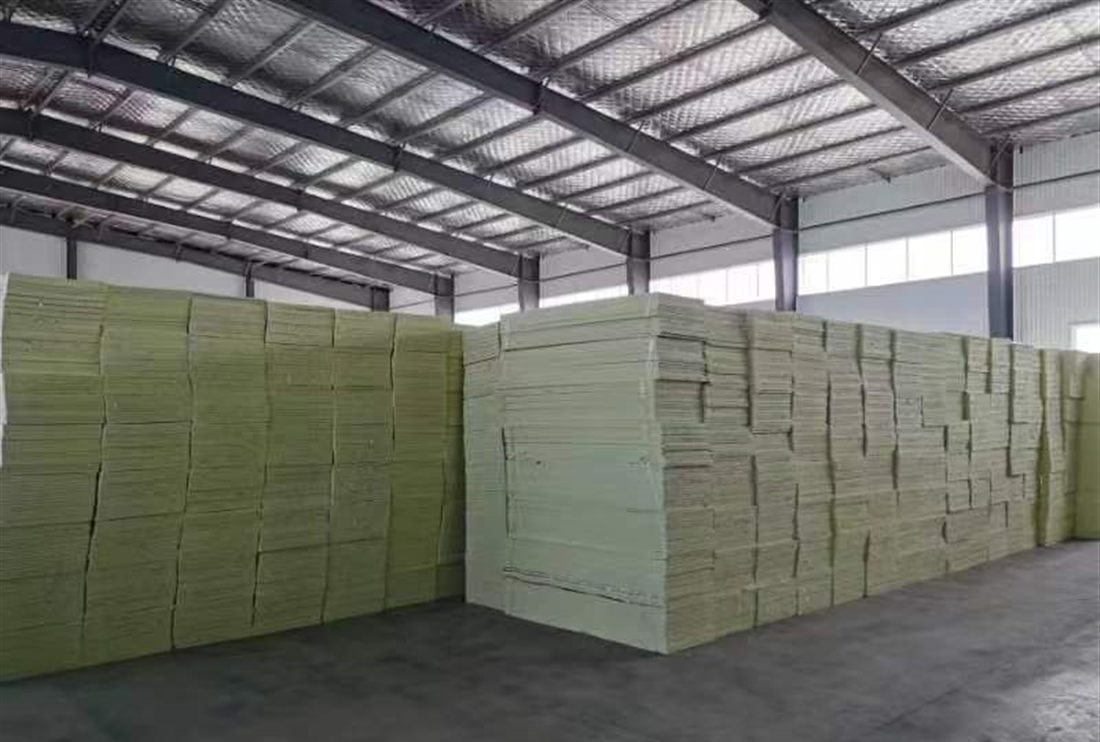
Finished stacks rest in place so internal stress releases and dimensions stabilise further.
Density, thickness, compressive strength and fire performance are checked against factory specifications.
Wrapped in stretch film, then loaded by project batch and delivered to site.
Applications
XPS boards are widely used for damp-proofing and insulation in dry wall insulation, flat concrete roofs and steel-structure roofs, low-temperature storage floors, under radiant floor heating pipes, car-park decks, airport runways and expressways, and are used to control frost heave of the ground.
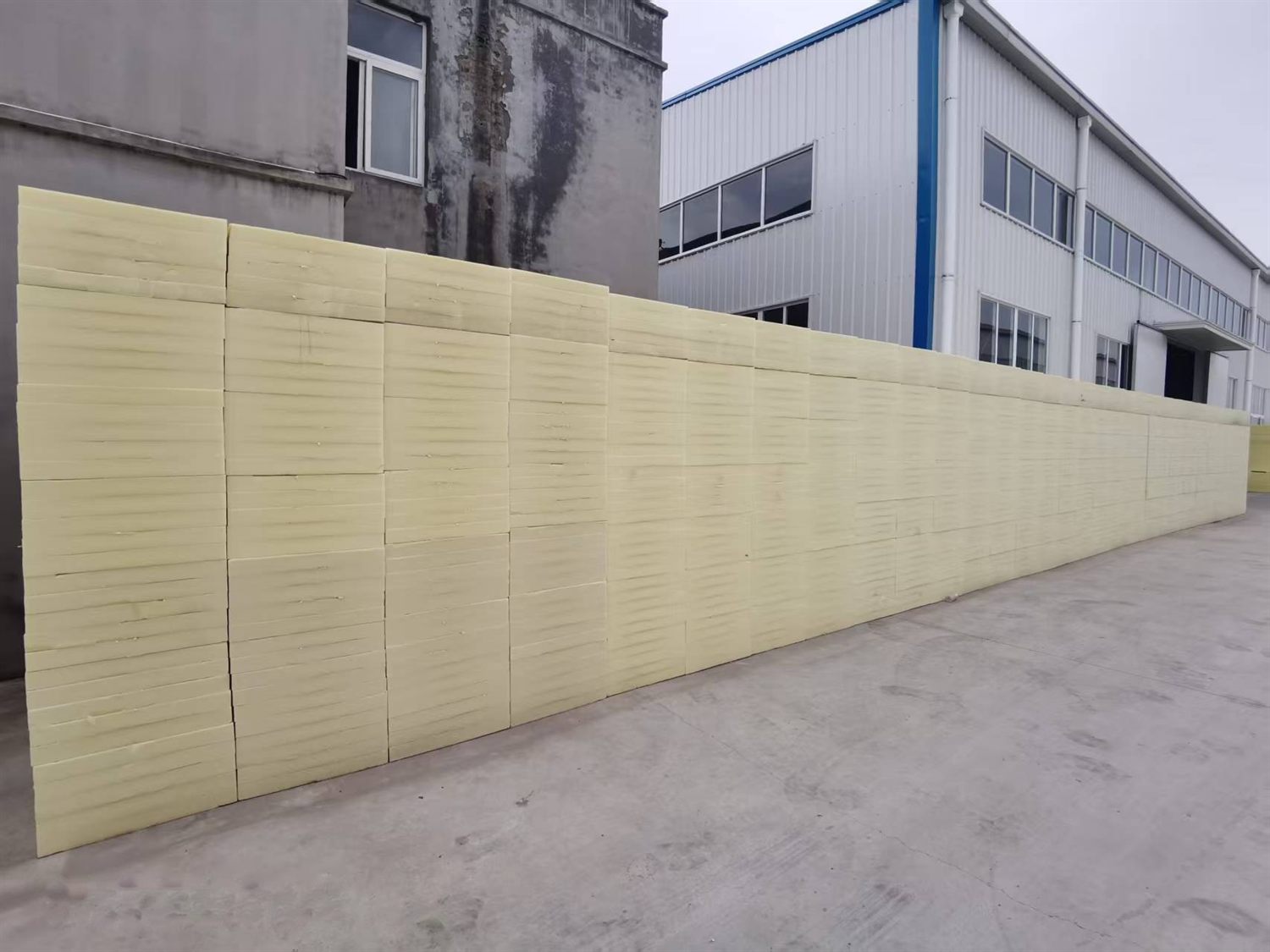
01
External wall insulation on cast-in-place concrete and masonry walls, reducing thermal bridges
02
Insulation and thermal protection for flat concrete roofs and metal roofs
03
Insulation under the heating pipes, with heat directed upward into the room only
04
Damp-proof insulation for low-temperature storage floors and walls
05
Damp-proof insulation for high-load floors and underground garage roof slabs
06
Frost-heave and damp protection for airport runways and expressways
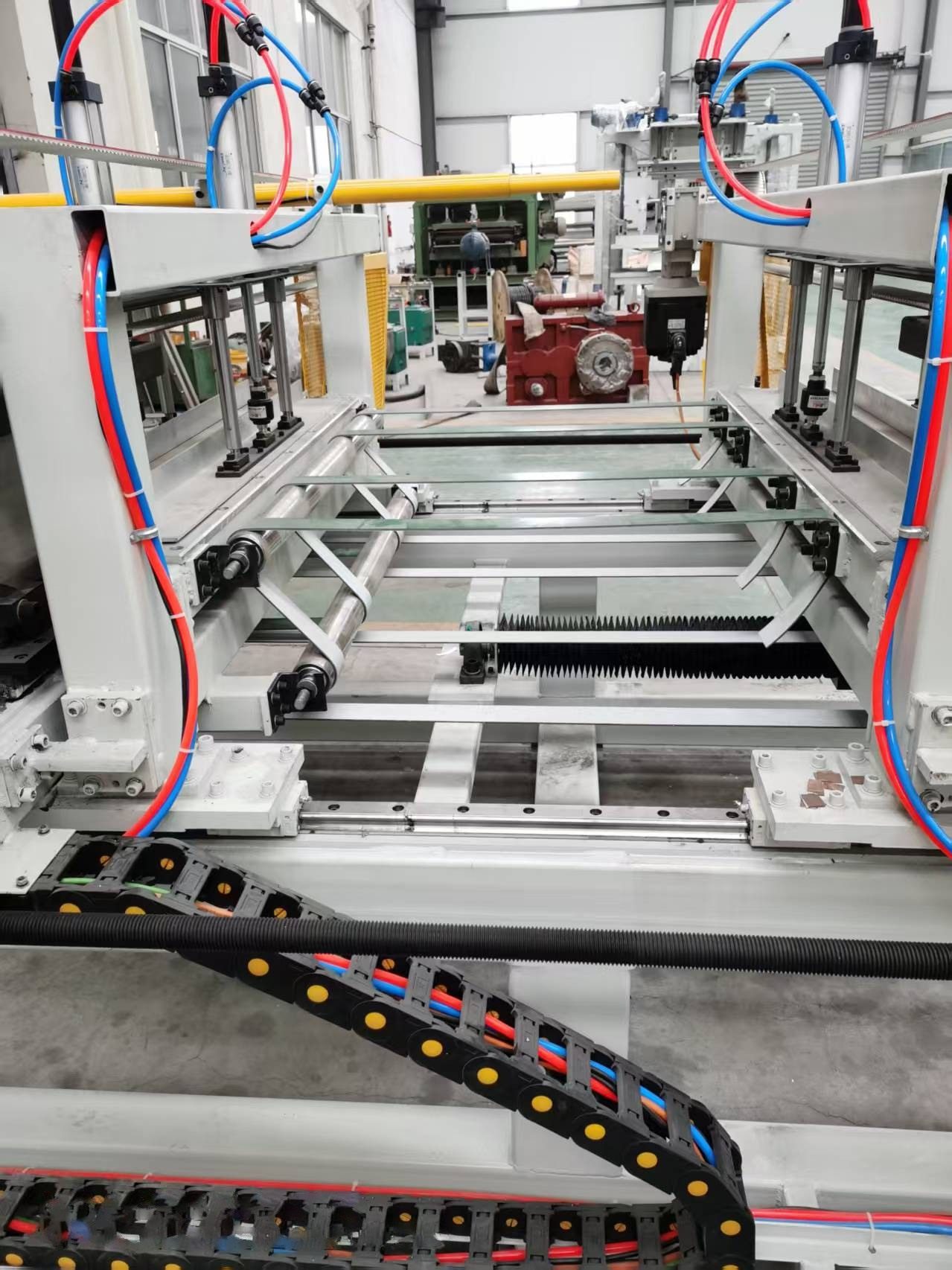
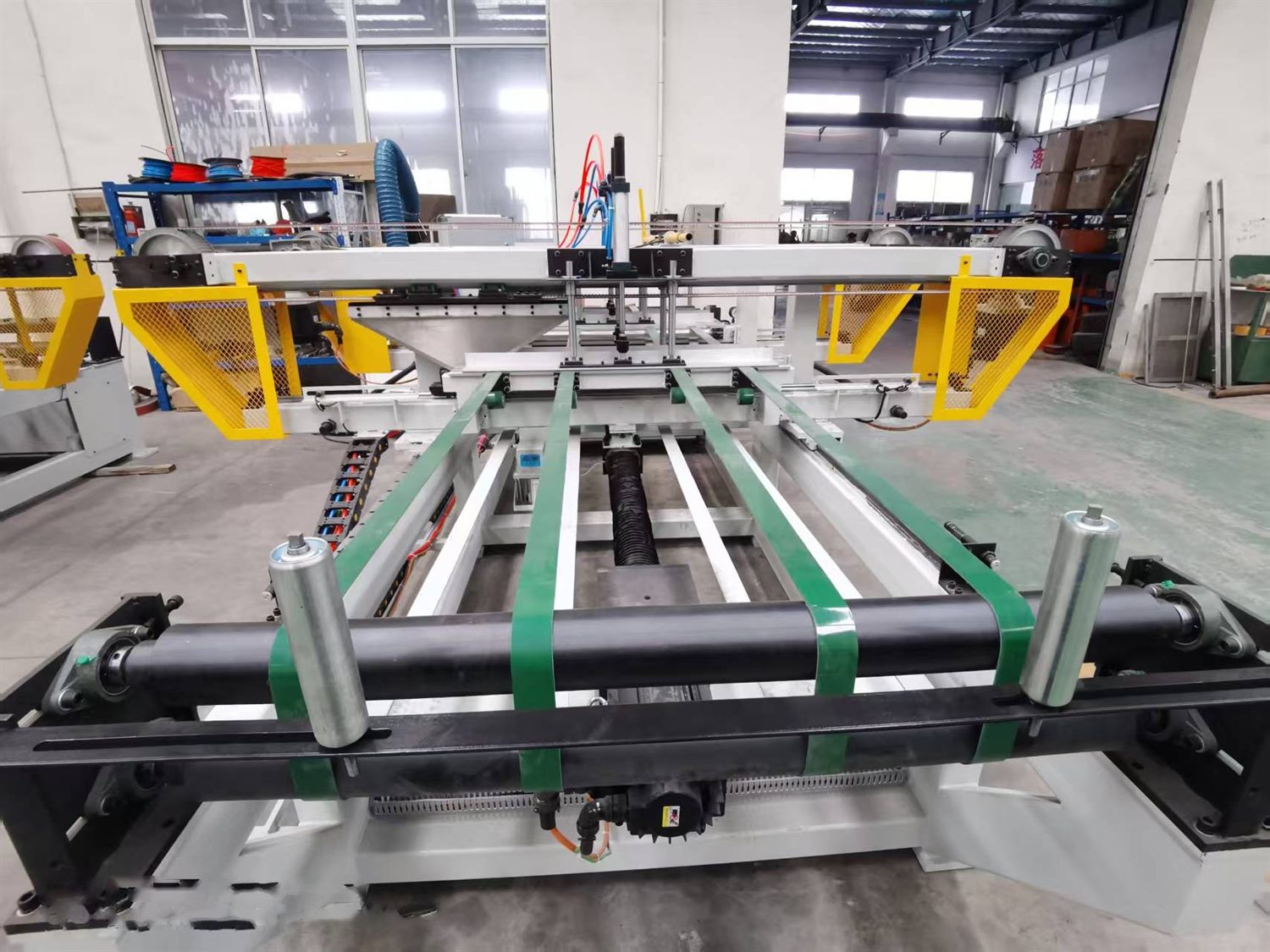
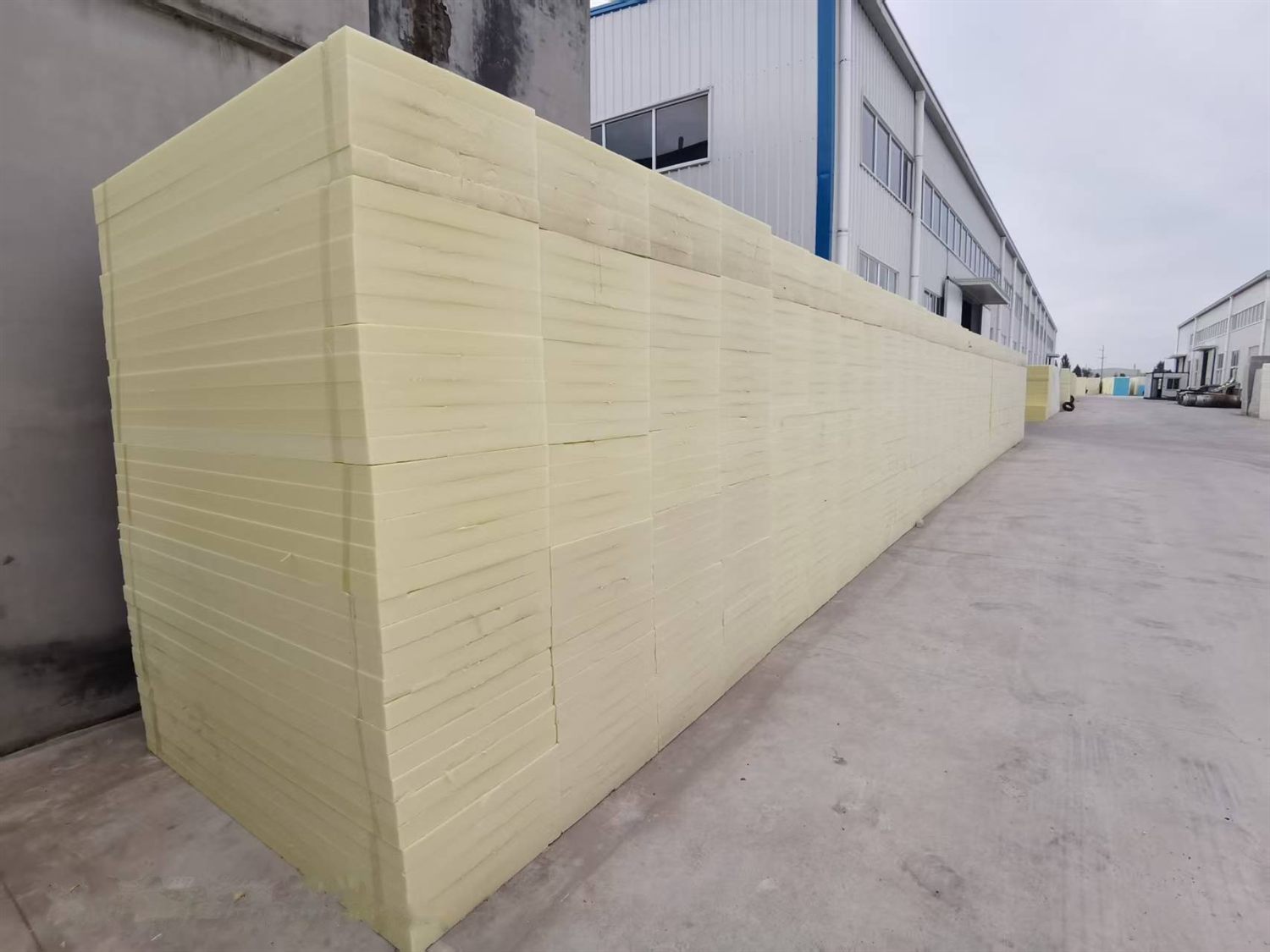
Manufacturing Shop
Workshops equipped with the extrusion main line, in-line cutting and stacking equipment, plus finished-goods yards at both plants.
Certificates
The certification scope in each case is management activities related to polystyrene foam (XPS) production. The certificates were issued by the certification body in August 2026 and are valid until 30 August 2029. Originals can be verified on the website of the Certification and Accreditation Administration of China (CNCA).
Sales Network
Products and services cover Qingdao, Yantai, Weihai, Rizhao and other cities, and the company is listed as a designated supplier by large domestic developers.
News & Insight
Industry news
According to the China Extruded Polystyrene (XPS) Market Research Report (2025–2026), domestic XPS output reached 3.8 million tonnes in 2025 with a capacity utilisation rate of 90.5%; the market size is expected to exceed 31 billion CNY in 2026.
Read moreIndustry news
The report notes that the nationwide penetration of B1 class fire-retardant XPS reached 53.7% in 2025 and is expected to rise to 61.2% in 2026; low-end standard boards face intense homogeneous competition, while compliant high-end capacity has become the core of competition.
Read moreCompany news
The certification scope of all three certificates is production of polystyrene foam (XPS). They were issued on 2026-08-31 and are valid until 2029-08-30; the Chinese and English certificates are now available to view on this site.
View certificatesTechnical Q&A
For the same thermal resistance requirement, XPS boards with a thermal conductivity of 0.028W/(m·K) can be noticeably thinner than ordinary insulation materials; the article gives selection ranges of 30–80 mm and points to watch for common positions.
Read moreTell us the element — wall, roof, underfloor heating or cold store — and the thickness required, and we will advise on common sizes to GB/T 10801.2, send samples and quote batch supply.