Home/Products/XPS insulation board

XPS Insulation Board (Extruded Polystyrene Board)

A rigid foam board made from polystyrene resin blended with other polymers, heated and mixed on the extruder screw while blowing agent is injected, then extruded continuously through a die to form closed-cell foam.

Product 01 · XPS

XPS board: what it is

Inside an XPS board the cells are independent, sealed air bubbles. This gives an environmentally friendly insulation material with high compressive strength, low water absorption, damp resistance, low air permeability, light weight, corrosion resistance, very high ageing resistance (almost no ageing over long service) and low thermal conductivity.

Product name: XPS insulation board · Foreign name: Extruded Polystyrene Board · Also known as: XPS board, extruded board

It is widely used for insulation of dry walls, flat concrete roofs and steel-structure roofs, and for damp-proofing and insulation of low-temperature storage floors, insulation under low-temperature radiant floor heating pipes, car-park decks, airport runways and expressways. It is also used to control frost heave of the ground, and is a cost-effective, good-quality thermal insulation and damp-proof material for the construction industry.

Closed-cell structureHigh compressive strengthLow water absorptionLight weightCorrosion resistantClass B1 available
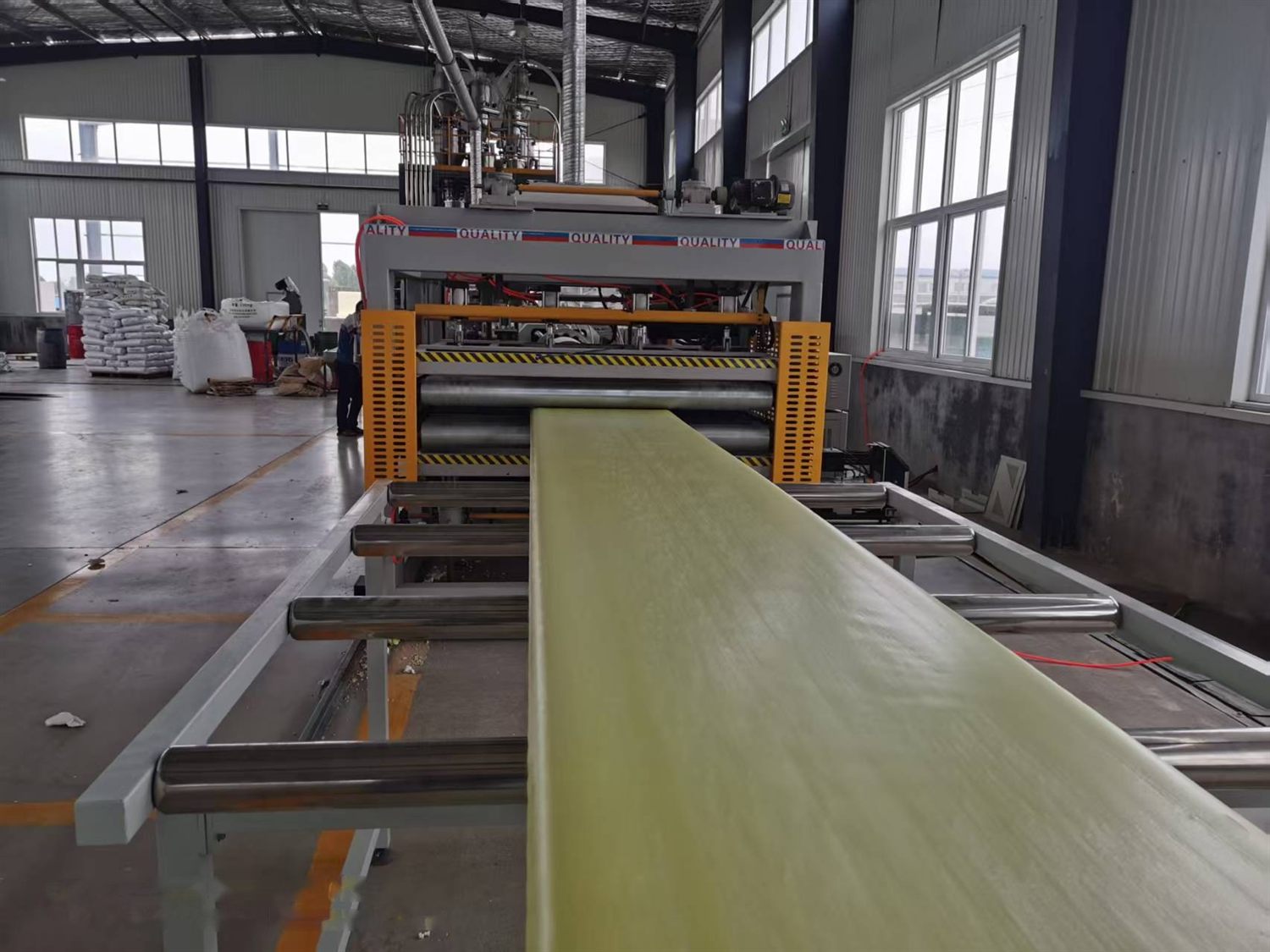
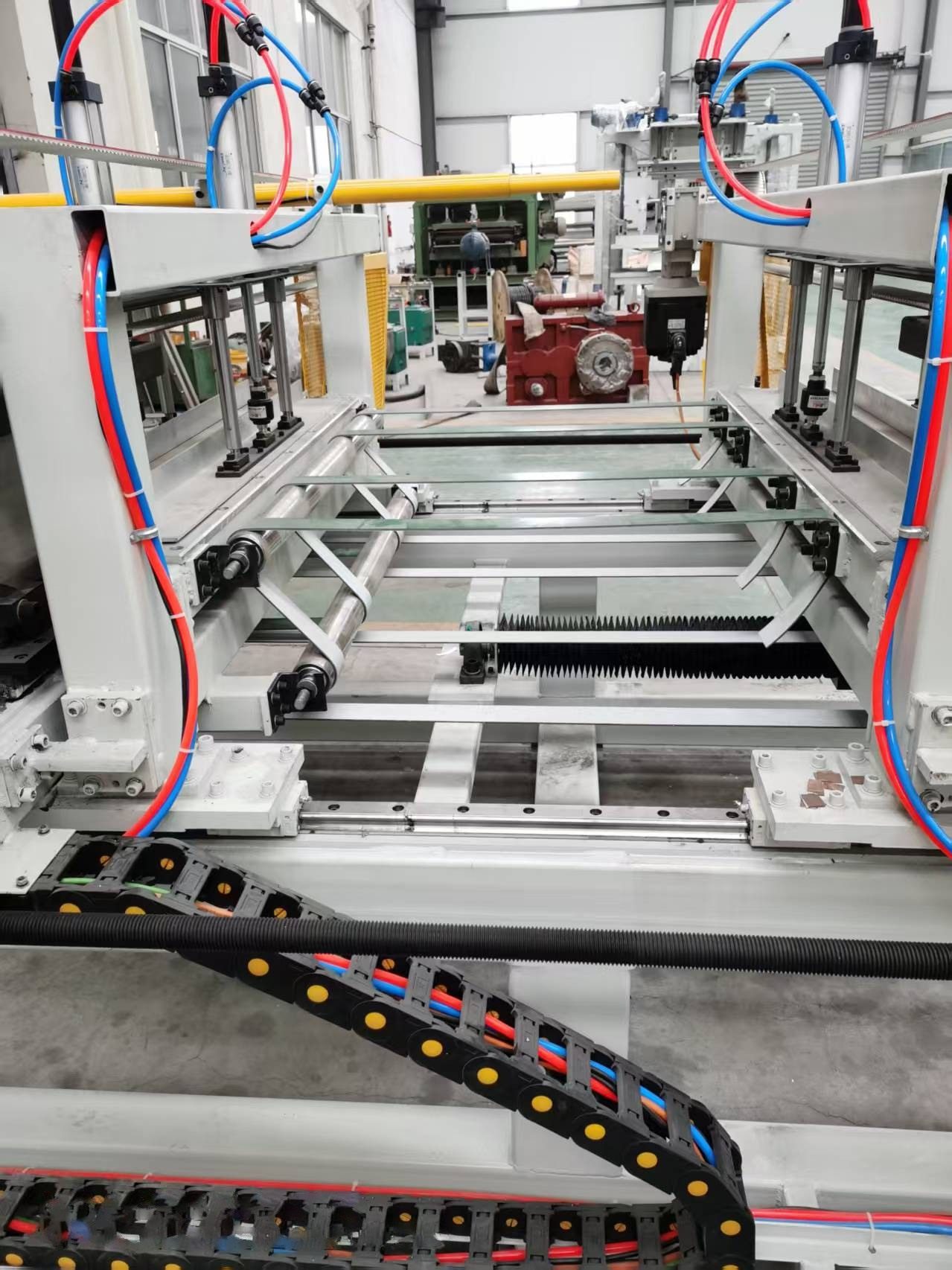
XPS insulation boards coming off the die and running continuously along the roller line
0.028Thermal conductivity W/(m·K)

Technical Data

Technical data

Main performance indicators of XPS insulation board (typical values)
Test itemUnitTypical value / range
Thermal conductivity (mean temperature 25 °C)W/(m·K)≤0.028–0.030
Density (apparent)kg/m³32–45
Compressive strength (at 10% deformation)kPa150 / 200 / 250 / 300 / 350 / 400 / 500 / 700
Water absorption (by volume, soaked 28 d)%≤1.0–2.0
Volume stability%≤1.0
Dimensional stability (70 °C, 48 h)%≤2.0
Fire performance class—B1 (flame-retardant) / B2 (combustible) / standard type
Oxygen index (OI)%≥26–30
Water vapour permeability coefficientng/(Pa·m·s)1.5–3.5
Service temperature°C-50 to +75 (short term ≤ 80)
Service lifeYears30–40

The table above compiles the company's common supply ranges and product literature data, for selection reference; acceptance values for projects follow the national standard GB/T 10801.2 and the factory inspection report for the batch concerned.

Sizes

Sizes and edge types

Common supply sizes
Board thickness20 / 25 / 30 / 40 / 50 / 60 / 70 / 80 / 100 mm
Standard length1200 / 1800 / 2400 mm
Standard width600 / 900 / 1200 mm
Edge typePlain edge (TF) / tongue-and-groove edge (TG)
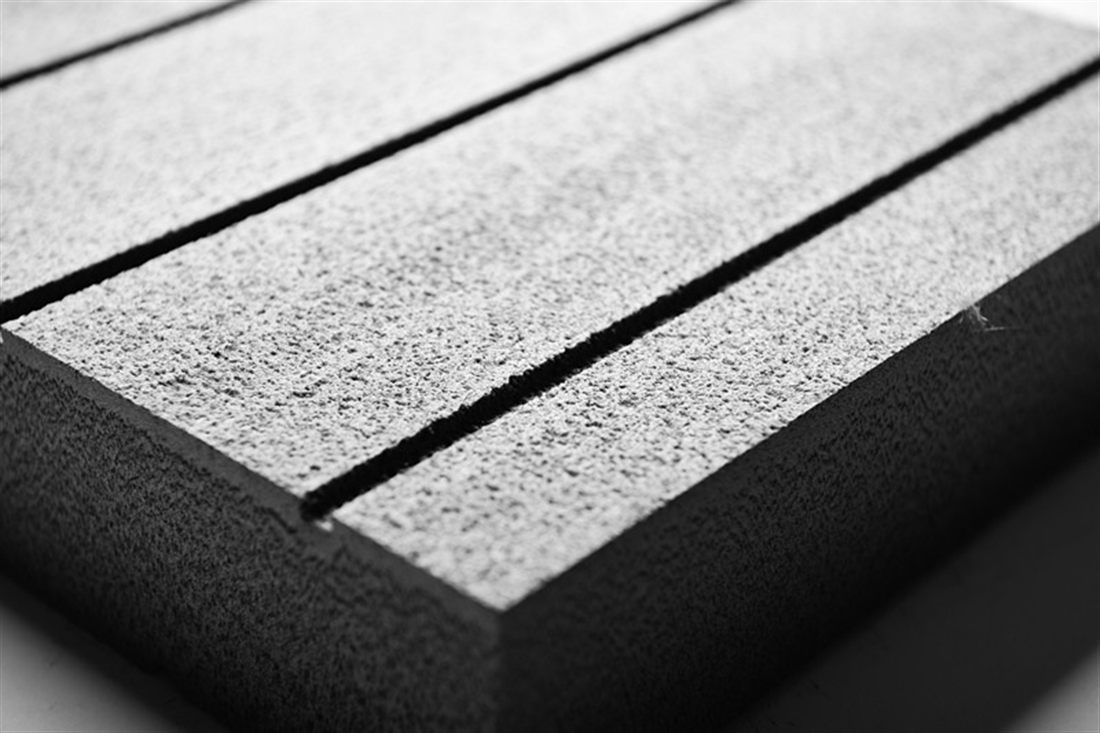
SurfaceSkin face / sanded face / roughened face / grooved (as required by the system)
ColourNatural (light yellow-green), blue, grey and others, varying with the raw material batch
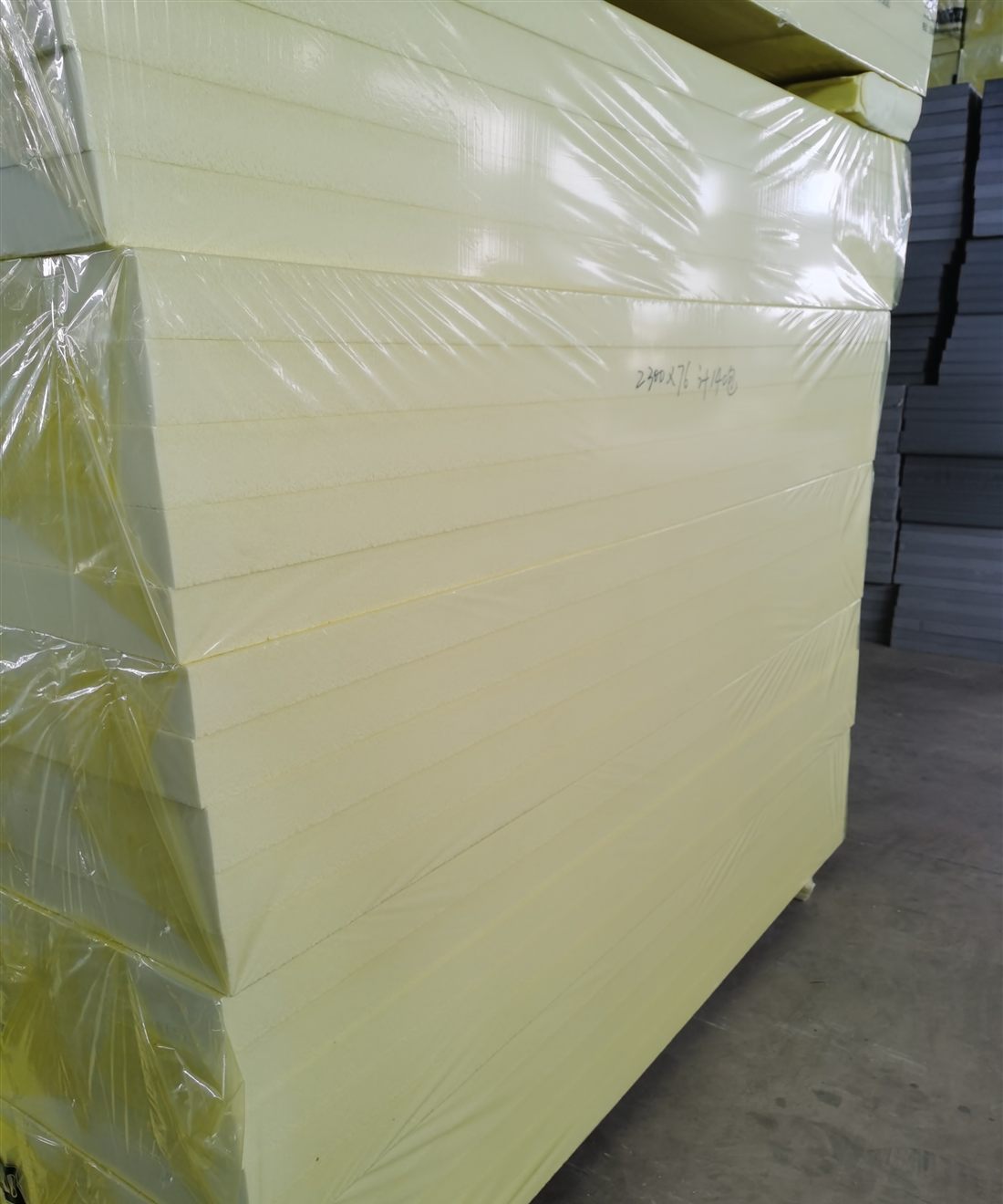
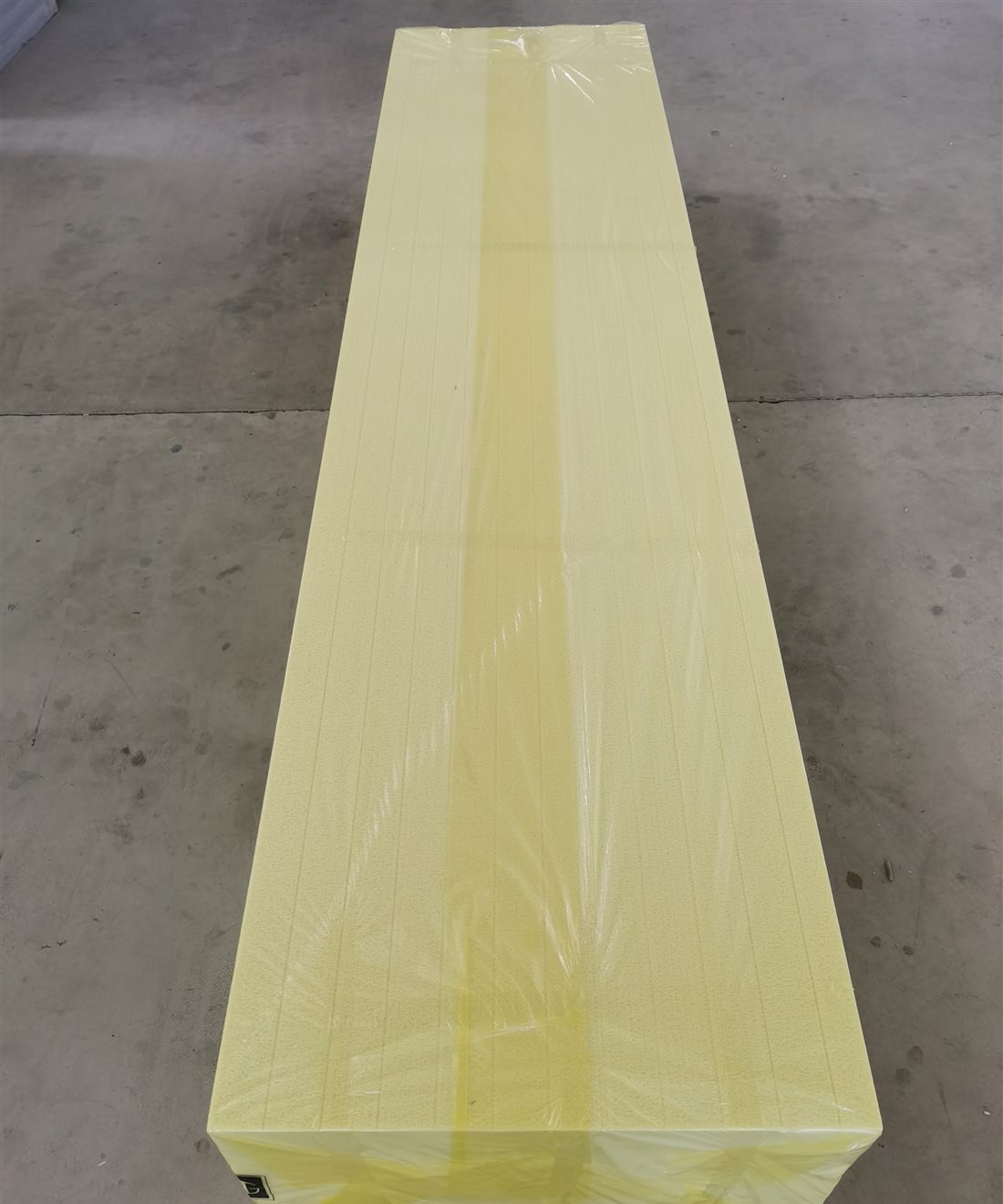
PackingWhole stacks wrapped in heat-shrink film, stacked separately by thickness
A whole stack of XPS boards wrapped in stretch film Stacks of boards stood upright
Non-standard cutting: shaped pieces, chamfered boards and cut-out blocks can be supplied from the setting-out drawing to reduce on-site cutting waste; for batch non-standard orders please provide drawings and a quantity schedule.

Features

Six core performance characteristics

Outstanding, long-lasting thermal insulation

A lower thermal conductivity is the goal of every insulation material. Polystyrene itself is an excellent low-conductivity raw material, and the compact honeycomb structure produced by extrusion foaming blocks heat conduction even more effectively, giving high thermal resistance at controllable cost, clearly below other insulation materials.

Superior waterproof and damp-proof performance

The dense closed-cell structure and the fact that polystyrene molecules themselves do not absorb water leave both board faces seamless and water absorption very low, so damp-proofing and vapour control perform well in humid environments and on low-temperature storage floors.

High compressive strength · Impact resistance

Compressive strength of 150–700 kPa is available by grade. Under car-park decks, floor beds and heavily loaded roofs the boards do not compress or deform easily, so the insulation layer keeps its thickness over the long term.

Corrosion resistant · Highly age resistant

Ordinary rigid foam insulation tends to age and absorb water after a few years, and performance drops. XPS boards keep their excellent performance even under high vapour pressure, with almost no ageing in long service and a service life of up to 30–40 years.

Fire performance class to order

Flame retardant added during production produces class B1 and class B2 boards. Class B1 is a flame-retardant material, suitable for external wall and roof insulation of high-rise and public buildings.

Light weight · Easy to install

The boards are easy to transport and to cut, fit well against the substrate, and reduce the amount of wet work and the construction period. They also combine readily with fibreglass mesh and rendering mortar to form the protective system.

Construction

Key points for external wall insulation work

XPS board surfaces are dense, so the work depends on three stages: interface treatment, mechanical fixing and render protection.

  1. Substrate check: the wall surface must be flat, dry and free of hollow spots and oil stains; where the flatness deviation is outside tolerance, carry out levelling first.
  2. Marking and datums: snap control lines and set support brackets and datum lines so that the first course of boards runs level and plumb.
  3. Interface treatment: brush primer onto both faces of the boards or roughen them, to improve adhesion to the adhesive mortar and rendering mortar.
  4. Bonding the boards: fix with the dab-and-perimeter method or full-bed bonding, with the effective bonding area controlled to design and system requirements; stagger the board joints and fill gaps with pieces of the same material.
  5. Mechanical anchoring: once the adhesive layer has set, install insulation anchor fasteners to the layout drawing, at closer spacing at corners and in positions with high wind pressure.
  6. Render and mesh: apply the base coat of rendering mortar first, press in the alkali-resistant fibreglass mesh (overlap width not less than 100 mm), then apply the top coat of mortar up to the design thickness.
  7. Detail work: at the four corners of doors and windows reinforce the mesh diagonally with 200×300 mm strips, and treat the plinth, movement joints and eaves to the detail drawings.
  8. Curing and acceptance: after the top coat is complete, cure it according to the environmental conditions, avoid work in strong sun and in windy rainy weather, then carry out concealed-element and sub-section acceptance.
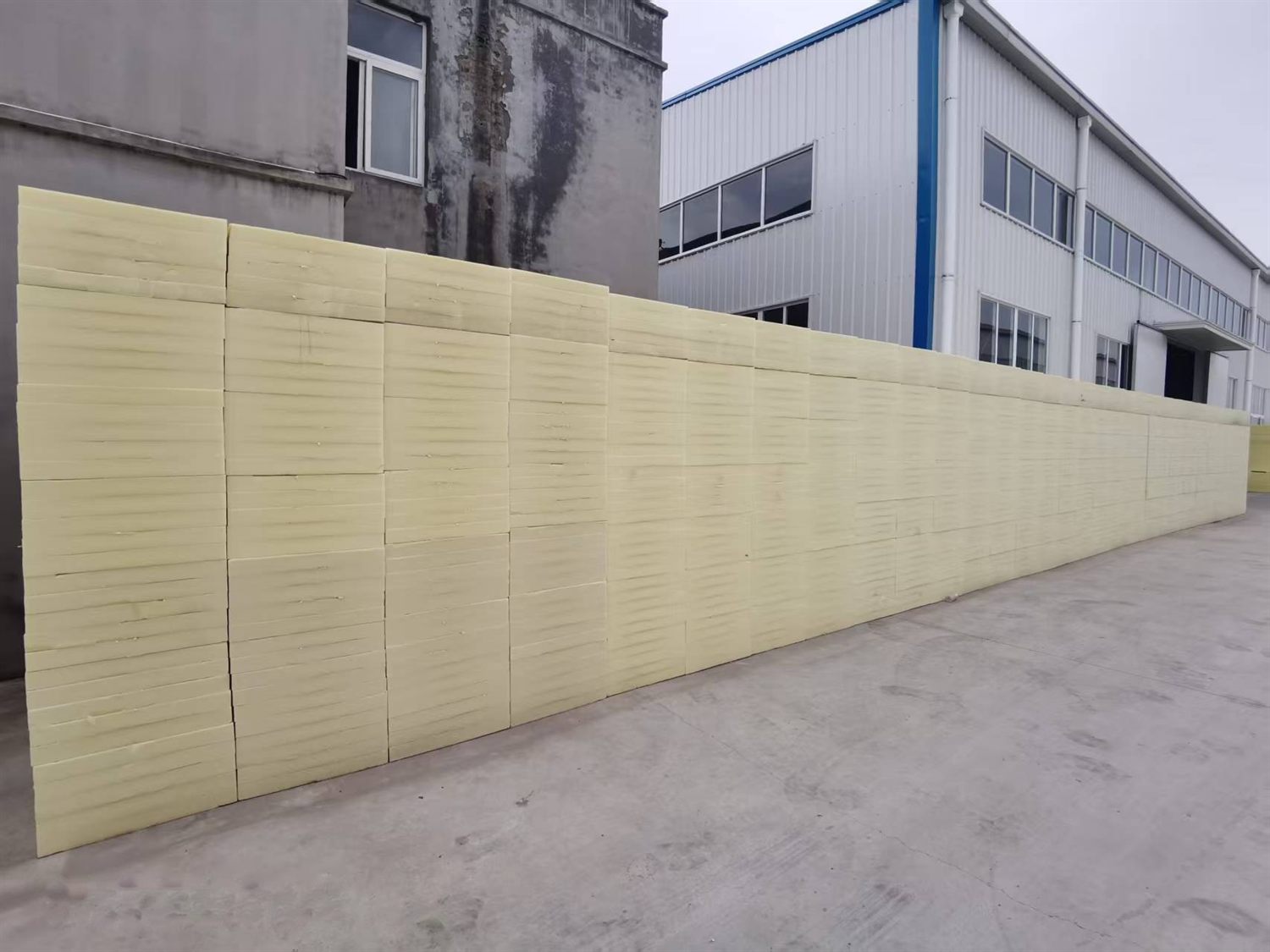
Stacks of finished boards waiting for dispatch Board cutting station Boards on the roller conveyor
Suggested ancillary material usage (reference per square metre)
Adhesive mortar4–6 kg
Rendering mortar5–7 kg
Alkali-resistant fibreglass mesh1.1–1.3 m²
Insulation anchor fastener6–8 nos.
Primer / interface agent0.2–0.35 kg

Actual usage varies with substrate flatness, system build-up and design thickness; the method statement governs.

Storage & Safety

Storage, transport and safety notes

Stacking area

The ground should be level, firm and well drained, with the base of the stacks levelled and protected from damp. For outdoor storage cover the stacks with tarpaulin to avoid surface chalking caused by long-term direct ultraviolet exposure.

Transport and loading

Whole stacks are tied upright or flat; sharp objects must not pierce the wrapping film. Packs must not be thrown when loading and unloading, so that board corners do not chip and affect joint quality.

Fire prevention and cutting

Keep boards away from open flame and welding sparks on site. Cutting is best done with a utility knife, hot wire or a dedicated saw table, and the work area must be kept ventilated and provided with fire-fighting equipment.

Need help selecting boards and pricing a project?

Tell us the element — wall, roof, underfloor heating or cold store — and the thickness required, and we will advise on common sizes to GB/T 10801.2, send samples and quote batch supply.